


 Amid the acceleration of national development and the growing need for responsible construction practices, Rahmat Tubagus Hakiem, a graduate of the Environmental Engineering program at Diponegoro University, has emerged as one of the young professionals driving sustainable transformation in Indonesia’s construction and waste management industries.
Early Education and Foundation of Expertise
Rahmat completed his Bachelor’s degree in Environmental Engineering at Diponegoro University, followed by further technical training through advanced studies at the Bandung Institute of Technology. His interest in waste management systems and environmental technology was evident during his undergraduate years, reflected in his research on microbial fuel cell-based waste treatment.
Professional Journey
Rahmat’s career began in the field of safety and the environment on national infrastructure projects, and later expanded when he joined PT Adhi Karya (Persero) Tbk. as part of the company’s waste management team.
At ADHI, Rahmat contributes to:
- Planning of industrial waste management technologies
- Development of integrated waste facilities
- Environmental permitting compliance and communication with the Ministry of Environment and Forestry
- Market analysis of hazardous waste as a potential sustainable business
- Implementation of ISO-based QHSE standards
He has been actively involved in various waste management innovations since 2018, including integrated waste treatment facilities, management of oil-contaminated soil, and construction waste management systems for the IKN project.
Contributions to Mangrove Ecosystem Rehabilitation
In addition to focusing on waste management, Rahmat also plays a role in ADHI’s coastal ecosystem restoration programs.
This year, ADHI implemented a mangrove rehabilitation program in Sedari Village, Karawang, as part of efforts to reduce greenhouse gas emissions. Beginning with the planting of 8,000 mangrove seedlings across 5 hectares during ADHI’s 65th anniversary, the program has continued to expand, covering 125 hectares by November.
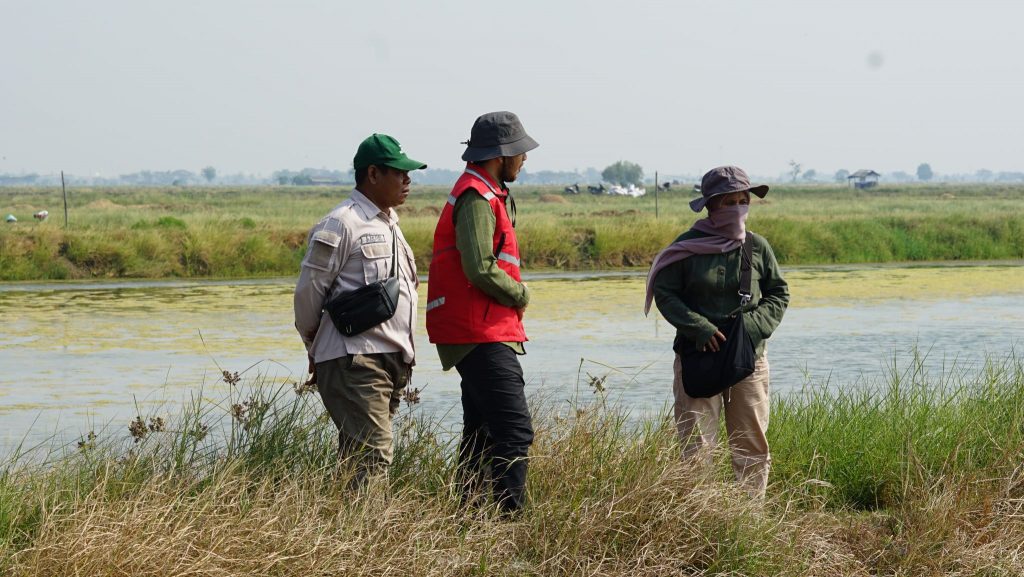
The goal is to plant 640,000 seedlings across 525 hectares by 2025, with the potential to reduce emissions by 137 million kgCO2eq by 2028.
As part of the implementation, monitoring, and evaluation team, Rahmat faces biological and environmental challenges in ensuring the success of the planting effort. To this end, ADHI collaborates with the Ministry of Environment and Forestry (KLHK) and the Sedari Village Forest Community Organization in the maintenance and protection of mangroves.
Inspiration and a Message for the Younger Generation
Through his journey, Rahmat demonstrates that the field of environmental engineering is not limited to technical planning and regulations, but also delivers tangible solutions for the environment and society. He proves that contributions to sustainable development can begin with fieldwork, community collaboration, and the implementation of industry standards.
Rahmat’s story serves as a reminder that sustainability is not merely an academic concept, but a mission that requires innovation, integrity, and long-term commitment.
Source :
https://lingkungan.ft.undip.ac.id/membangun-tata-kelola-limbah-dan-restorasi-ekosistem-kiprah-rahmat-tubagus-hakiem-dalam-infrastruktur-berkelanjutan/